
- Use IFS with children and their caregivers immediately — with the specific adaptations that make it safe and effective.
- Help children understand and connect with their own internal world through language and experiences that make sense to them.
- Integrate play, sandtray, puppets, and movement into the work — so you can meet kids where they are.
- Bring parents into the work in a way that helps them become more regulated, more available, and more attuned to their child.
- Facilitate the moments of rupture and repair that shift the parent-child relationship at its core.
- Recognize when your own reactions get activated by the family system — and return to a grounded, present place so you can stay effective in the room.
- Summarize the core concepts of the IFS model
- Analyze how IFS concepts apply across developmental stages
- Analyze the intersection of IFS and attachment theory
- Describe how the IFS model adapts for children's cognitive capacities
- Articulate how the IFS model adapts for children's emotional capacities
- Identify attachment-driven parts in children using IFS principles
- Identify attachment-driven parts in caregivers using IFS principles
- Explain how parental protectors influence attachment patterns and how they can be engaged to support attachment repair within the IFS model
- Apply IFS-informed play therapy techniques appropriate for children
- Apply IFS-informed techniques directive strategies appropriate for adolescents
- Analyze how regulation and co-regulation fit within the IFS framework
- Explain how to teach parents and caregivers IFS-informed regulation and co-regulation skills, including attunement, unblending and nervous system tracking.
- Identify trauma-related survival strategies commonly seen in families through an IFS lens
- Describe grief-related survival strategies commonly seen in families through an IFS lens
- Analyze clinical implications of integrating IFS and attachment theory for understanding protector dynamics, attachment patterns, and rupture-repair cycles
- Identify characteristics of a Self-led stance and explain how therapist unblending supports safety and attunement in complex parent-child systems
- Differentiate protector, manager, and firefighter roles in child and caregiver systems and analyze how these parts interact with parent-child relational cycles
- Analyze developmental disruptions that activate protector parts in parents
- Identify ethical considerations when applying IFS with minors and families
You work with children and want to go deeper than your current approach can take you. IFS doesn't replace what you do — it shows you what's driving the behavior underneath it, so you can finally reach the kids who shut you out and the parents you can't get on board.
You're a play therapist. You already read the play, the sandtray, the avoidance. IFS gives you the map for what's driving it — so you're not just following the play, you know what to do with it.
You're a family therapist. You already track the system. IFS goes a level deeper, to what's driving each person's position in it — so you can shift the pattern at its source instead of working it from the outside.
You keep hearing about IFS and you're curious — but every training you've found is built for adults. This is IFS taught in the one context that fits your work: children and families, from the ground up.
- How insecure attachment strategies show up as protective parts in children
- How parts show up differently in children than in adults
- How to help parents regulate themselves so they can regulate their child
- How early relational experiences shape a child's internal system
- How to track and reflect parts through a non-pathologizing lens
- Speaking parts language in child-friendly ways
- How to tell the difference between a kid being a kid and a part that needs help — and what to do either way
- How to use play, sandtray, fantasy and metaphor as a window into a child's parts
- Applying the 6 F's when working with children
- Working with attachment-based exiles — abandonment, rejection, and relational trauma
- Common protectors in children and how to work with them
- Using creative modalities — sandtray, art, movement, puppets — in parts work
- How to read the signs that a child is dysregulating — and what to do in the moment to bring them back
- How to show up grounded and present — and why for some kids, that's the most powerful intervention in the room
- How parental parts block or facilitate attachment
- Common parental protectors and how to work with them
- How unresolved wounds pass from parent to child — and what you can do in the room to start breaking the cycle
- Helping parents understand their triggers and unblend from reactive parts
- A step-by-step framework for helping parents see their child through a parts lens — and respond from a place of intention rather than reaction
- Identifying rupture patterns in parent-child relationships
- Slowing down interactional cycles
- Coaching parents in Self-led responses
- Using misattunement as therapeutic material
- Mapping the parent-child parts cycle
- Teaching parents to P.A.U.S.E.™ when their child is dysregulated
- Helping children feel seen, heard, understood, valued and validated
- Facilitating parent repair and acknowledgement from Self
- Healing legacy burdens in the parent-child relationship
- Working with developmental trauma and disorganized attachment
- Loss, medical trauma, adoption, foster care, abuse, and chronic stress
- How to pace the work so you never push a child deeper than they're ready to go
- How to hold grief without rushing repair
- Tracking your own parts — and staying Self-led when the work gets hard
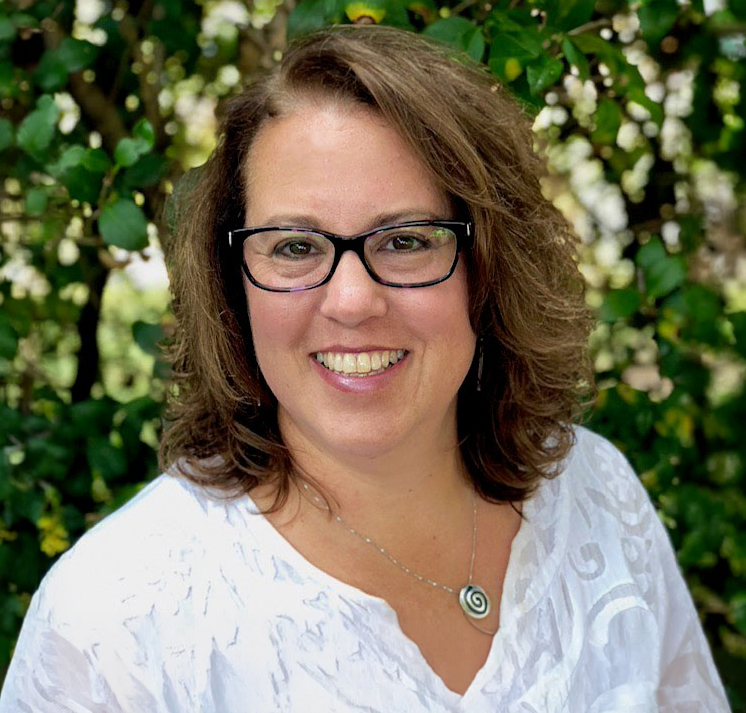
Leslie Petruk is a Lead Trainer with the IFS Institute — the organization founded by IFS creator Dr. Richard Schwartz — which means she's qualified to train clinicians in the model itself. And she's spent nearly three decades doing it where it's hardest and matters most: with children, parents, and whole families.
Alongside her IFS work, she is a Licensed Clinical Mental Health Counselor (since 1996), a Licensed Marriage and Family Therapist, a trained play therapist, and a Board Certified Coach. She is Director and Clinical Supervisor at The Stone Center for Counseling & Leadership, where she works directly with children and families facing trauma, grief and loss, anxiety, divorce, special needs, and the behavioral struggles that surface at home and at school.
She doesn't just know how to teach IFS — she knows how it works in the room with a dysregulated eight-year-old, a triggered parent, and a family in crisis.
If you've ever wished someone would just show you how to do this — with children, with parents, with the whole complicated system — Leslie is that person.
This training is designed for:
- Psychologists
- Counselors
- Social Workers
- Play Therapists
- Marriage & Family Therapists
- Psychotherapists
- School Counselors
- Case Managers
- Other Mental Health Professionals
There will be a 70-minute lunch from 11:50am-1pm, as well as two 15-minute breaks – one in the morning and one in the afternoon at the speakers’ discretion.
Register for this intensive training course without risk. If you're not completely satisfied, give us a call at 800-844-8260.
We’re that confident you'll find this learning experience to be all that's promised and more than you expected.